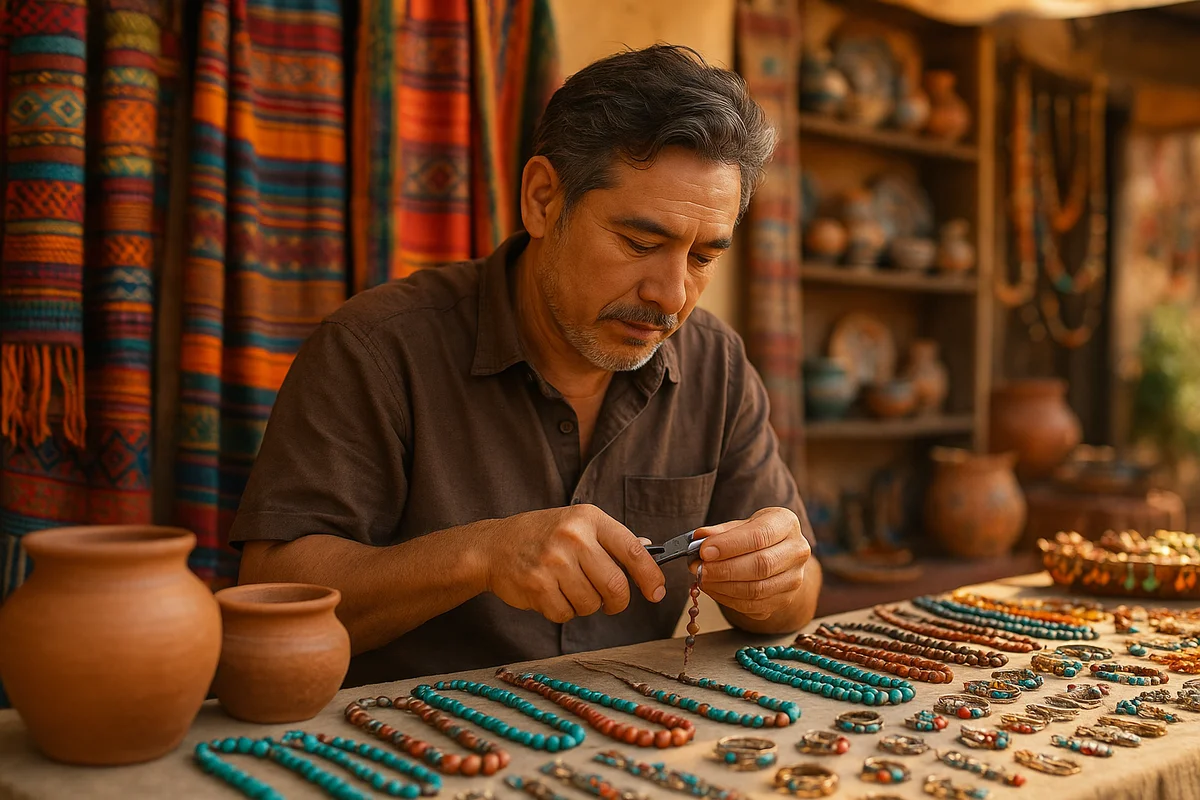
Supporting local artisans starts with understanding who made an item and how it reaches you. A market visit, a paid workshop or a carefully chosen purchase can support a maker's work. Buying something labeled handmade does not automatically mean that all the money stays locally or that its production meets a particular ethical standard.
Before your next trip, leave space in your itinerary and budget to meet craftspeople on their terms. Ask about their process, respect their time and choose something you will use or value after returning home.
Support the Skills Behind the Souvenir
UNESCO's explanation of traditional craftsmanship emphasizes knowledge and skills, and their transmission within communities, rather than only preserving finished objects. That makes a workshop or demonstration worth considering alongside a purchase.
Paying a maker for work or teaching can contribute to their income. The wider effect depends on the business, its costs and its relationships with suppliers. There is no reliable universal percentage showing how much of every souvenir purchase stays in a destination. Ask who receives the payment instead of relying on sweeping claims about community benefit.
Find Markets and Workshops Before You Go
Look for maker-run studios, cooperatives, cultural centers and public craft events. Local tourism offices and market organizers can suggest starting points, while a maker's own website or social account may provide current visiting information.
- Confirm the date, opening hours and whether visits require an appointment.
- Ask whether the event includes producers, resellers or both.
- Check workshop fees, duration, language and what materials are included.
- Plan transport and leave enough time to visit without rushing a demonstration.
A tour that stops at a workshop does not automatically provide private access or a meeting with the maker. Ask the operator what the visit includes, whether shopping is optional and whether any commission arrangement affects the stops. Verify event dates directly rather than assuming a seasonal market follows the same calendar every year.
For a Costa Rica trip, use the Guanacaste area guide to choose a practical base, then confirm craft visits with the hosts. Keep workshop plans flexible if your route or accommodation changes.
Ask About the Maker, Materials and Process
Irregular shapes, brushstrokes, natural materials and signatures can be interesting details, but none is proof that an item is handmade, locally made or fairly produced. Skilled makers can produce very consistent work. Handmade goods can use imported materials, and factory-made goods can imitate a handmade appearance.
Try a few specific questions:
- Who made this piece, and where was it made?
- Which parts were made by hand and which used tools or machinery?
- What materials are used, and where do they come from?
- Is this an original design, a regional pattern or a reproduction?
- Can the maker provide care instructions and a receipt?
A reseller can provide a useful route to market for craftspeople. Ask how they work with makers instead of assuming that every intermediary is harmful. Likewise, a language barrier or a brief answer does not establish dishonesty. Use a translation aid if welcome, and accept that some techniques or cultural knowledge may not be shared with visitors.
If a seller mentions a certification, find out which organization issued it and what it covers. A label about trading practices is not automatically a certificate proving every item was made locally. Avoid repeating claims you cannot check.
Buy Directly When Practical and Pay Respectfully
Buying from the maker gives you a chance to ask about the work and pay them directly. It does not, by itself, prove a fair wage or remove their material and selling costs. Treat the stated price as payment for skill, materials and time rather than as a challenge to win a bargain.
The World Fair Trade Organization's principles describe fair payment as an agreement reached through dialogue with producers. For a traveler, the practical lesson is to ask politely about prices and terms rather than assume a low price is the best outcome. These principles are not a claim that a particular stall or product is certified.
Ask which payment methods the business accepts. For custom work, agree on the description, price, deposit, completion date and delivery arrangements before paying. Keep a receipt and the maker's contact details. A clear order is more useful than a vague promise that something will be ready before your flight.
Respect the Workshop and Its Boundaries
Greet people, ask before photographing them or their work, and follow any restrictions on recording, touching tools or entering work areas. A studio is a workplace, even when it welcomes visitors. Do not interrupt a delicate task to request a photo.
Ask whether demonstrations are scheduled or paid. If you join a class, pay the agreed fee and follow the instructor's guidance. Do not request copies of another maker's design or assume that a cultural motif is available for unrestricted reuse.
You can also support a maker without buying a large object: book a lesson, purchase a smaller piece you want, or share their public business information with permission. Credit the maker accurately if you describe the work later. Avoid promising publicity in place of payment.
A Five-Question Market Checklist
- Maker: Do you know who made the item and where?
- Process: Can you describe the materials and method without guessing?
- Price: Have you agreed on the total and any custom-order terms?
- Permission: Have you asked before taking photos or recording a demonstration?
- Practicality: Can you care for, pack and transport the item?
Before buying fragile pottery or bulky textiles, check space and weight with the travel packing checklist. Ask the seller about protective packaging, and check current destination and home-country rules before buying items made from plant, animal or other potentially restricted materials.
Set your souvenir budget before browsing with the free travel money check-up. Buying fewer pieces you understand and value gives you a clearer connection to the work than filling a bag with items whose origins you cannot explain.