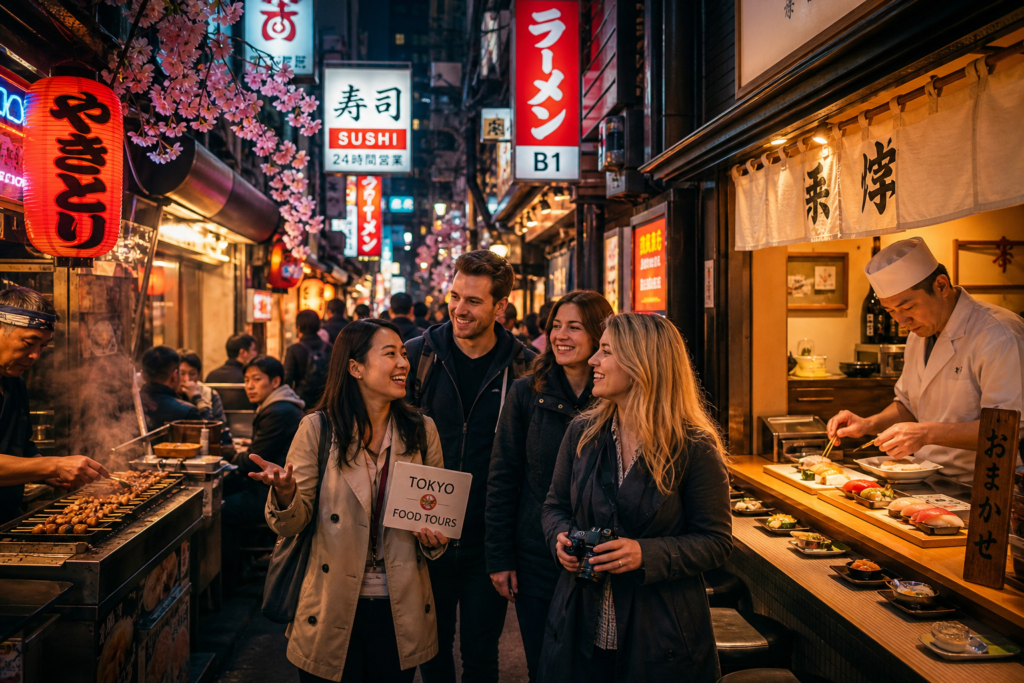
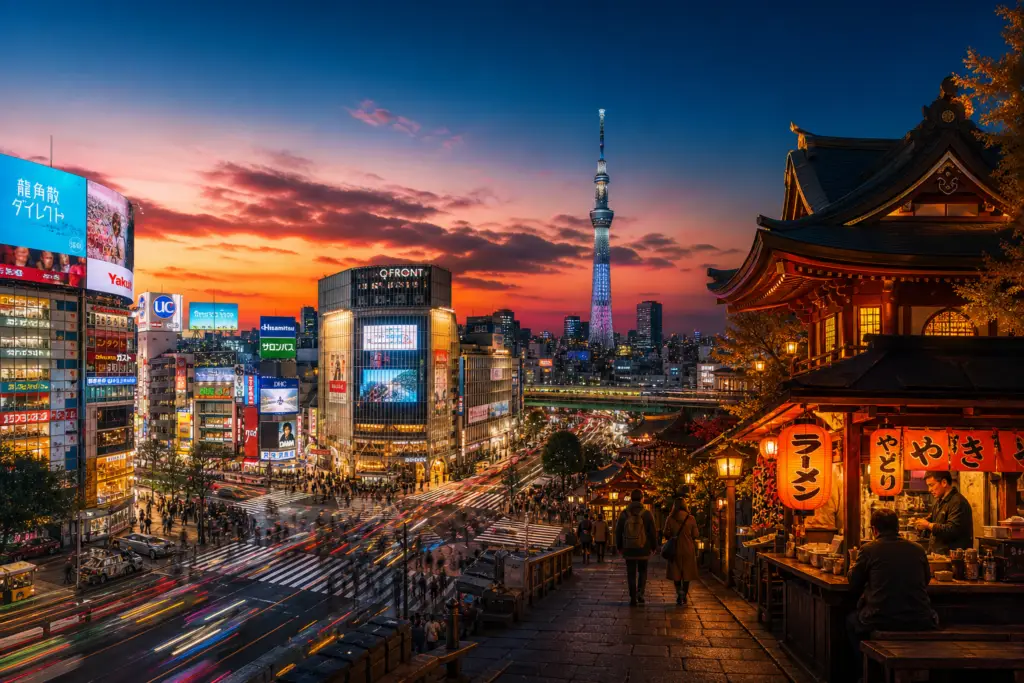
If you’re trying to figure out the best activities in Tokyo, here’s my honest take: don’t treat this city like a checklist. Tokyo rewards smart combinations — one neighborhood walk, one food experience, one skyline view, and one easy cultural stop. That’s how you go from seeing Tokyo to actually feeling it.
I built this hub to help you choose by interest, not just by map pin. Whether you’re after food, first-time sightseeing, family-friendly plans, or a day trip outside the city, I’d start with the main Tokyo page and, if you’re planning beyond the city, the broader Kantō Region guide. Tokyo is huge, but the right activities make it feel manageable.
Tokyo Activities Overview
Tokyo is one of those cities where every neighborhood has its own personality. Shibuya is fast and electric, Shinjuku is layered and late-night, Asakusa feels more traditional, and Odaiba gives you that open, waterfront, family-friendly vibe. That’s why I always tell travelers to stop asking, What is there to do in Tokyo? and start asking, What kind of Tokyo day do I want?
If you’re planning a first visit, the sweet spot is usually a mix of:
- A walking tour to get your bearings and learn the city fast.
- A food experience so you actually taste the neighborhoods, not just pass through them.
- An observation deck or tower for the scale and skyline.
- A temple, shrine, or cultural stop for contrast and context.
- One night-out district like Shibuya or Shinjuku for the classic Tokyo energy.
The good news is that Tokyo’s transit system makes this easy once you understand the basics. The better news is that I’ve already curated the options I’d start with most often, so you can build a trip that fits your pace instead of racing across the city.
Top Directory Listings for Tokyo Tours and Experiences
When I’m helping someone narrow down Tokyo activities, I like to start with verified options that solve a real problem: orientation, food, sightlines, or transportation. These are the listings I’d put at the top of my own planning list.
Best for first-time orientation
Tokyo Free Walking Tour – Tokyo Localized is a strong starting point if you want a low-cost, high-value introduction to the city. Free walking tours are ideal on day one because they help you understand train lines, neighborhood flow, and local etiquette without burning your budget. I like these for travelers who want a big-picture overview before they commit to bigger paid experiences.
Best for food lovers
Ninja Food Tours is the kind of listing I look for when a traveler says, I want to eat well, but I don’t want to waste time guessing. Food tours are one of the smartest activities in Tokyo because they turn a meal into a neighborhood lesson. In a city this large, a guide can help you find the places you’d probably miss on your own.
Best for skyline sightseeing
Tokyo Tower is still one of the easiest and most rewarding sightseeing add-ons in the city. If you want a classic Tokyo skyline moment, this is a dependable choice, especially if you’re already exploring central neighborhoods. For most first-time visitors, tower views are one of the cheapest big-reward experiences in town, often in the roughly ¥1,500 to ¥3,500 range depending on the deck or package.
Best for guided day-trip support
Japan Wonder Travel is a great option when you want to cover more ground efficiently, especially if you’re building a day trip or a small-group sightseeing day around Tokyo. I like this kind of operator for travelers who want structure without losing the fun of discovery.
Best for stress-free transfers
Hire Taxi Japan is especially useful if you’re traveling with kids, carrying big bags, arriving late, or just want door-to-door ease. Tokyo’s trains are excellent, but there are times when a taxi saves the whole day — especially early mornings, late nights, or hotel-to-hotel transfers.
Best Food Activities in Tokyo
Food is not just part of Tokyo activities; it is one of the main activities. I’ve always believed that the fastest way to understand a neighborhood here is to eat your way through it. Tokyo’s food scene is incredibly layered, from tiny noodle counters to market snacks to polished tasting menus.
Shinjuku: neon, yakitori, ramen, and late-night energy
Shinjuku is one of my favorite places to build an evening around because it gives you so many food options in a compact area. Start near Omoide Yokocho for the classic alley atmosphere, then drift toward Kabukicho if you want the full after-dark city glow. This is where I like travelers to try yakitori, gyoza, and a quick ramen stop.
If you want a practical food plan, use your walking tour earlier in the day, then return to Shinjuku for dinner. After that, you can keep things easy with a set meal or a casual snack crawl. For straightforward restaurants, I’d also browse the Tokyo Restaurants page and look for a place close to your hotel so you’re not chasing dinner across the city.
Asakusa: traditional snacks and old-Tokyo comfort food
Asakusa is where Tokyo feels a little slower and a little more nostalgic. Walk Nakamise-dori, snack on melon pan or ningyo-yaki, and then sit down for tempura or soba nearby. I like Asakusa for travelers who want food mixed with atmosphere, not just flavor. You can pair a temple visit at Senso-ji with a lunch stop and make a full half-day out of it.
Asakusa is also a good neighborhood for people who prefer a calmer dining scene. You’ll still get plenty of energy, but it feels more approachable than some of the city’s flashier districts.
Tsukiji-style food stops: market bites, seafood, and morning grazing
Even though the main wholesale operations moved to Toyosu, the Tsukiji Outer Market still delivers exactly what most travelers want: excellent street snacks, fresh seafood, tamagoyaki, and a lively market stroll. If you like to eat as you walk, this is a must. I always recommend going early, before the crowds thicken and before the best bites sell out.
Look for grilled scallops, sushi breakfast counters, and specialty stalls selling Japanese omelets and seasonal produce. A lot of travelers think they need a full guided tour here, but honestly, even a self-guided market stop can be a great activity if you go with a loose plan and a hungry stomach.
What I’d budget for food activities
- Street snacks and market grazing: about ¥1,500 to ¥3,000 per person.
- Food tours: commonly ¥10,000 to ¥18,000 depending on duration and inclusions.
- Mid-range sit-down meals: often ¥2,000 to ¥5,000 per person.
If your schedule is tight, I’d do one guided food experience and one independent neighborhood food stop. That gives you context plus flexibility, which is the best combo in Tokyo.
Iconic Tokyo Landmarks and Observation Decks
If this is your first time in Tokyo, you should absolutely make room for at least one skyline view and one cultural landmark. These are the activities that help the city click into place. You’ll understand just how massive Tokyo really is, and you’ll get that satisfying contrast between old and new Japan.
Tokyo Tower, Tokyo Skytree, and the classic skyline comparison
Tokyo Tower is one of the city’s most iconic landmark visits, and I still think it deserves a spot on a first-timer’s list. It has that old-school Tokyo charm that feels different from the more modern high-rise views. If you have time, compare it with Tokyo Skytree too — Skytree is bigger and more futuristic, while Tokyo Tower feels more intimate and classic.
For most travelers, observation decks are worth it if you’re only doing one or two big scenic stops. They are also easy to combine with shopping, dinner, or a nearby shrine visit. A good Tokyo day often looks like this: morning culture, afternoon view, evening food.
Temple visits that still feel essential
No first Tokyo itinerary feels complete without at least one temple or shrine experience. Senso-ji in Asakusa is the obvious classic, but I also like Meiji Jingu if you want a quieter, wooded contrast near Harajuku and Shibuya. These places aren’t just photo stops — they give the city breathing room.
My tip: don’t rush temples. Give yourself time to walk the grounds, notice the details, and enjoy the reset before you jump back into Tokyo’s pace.
Museum-style and immersive experiences
If the weather turns or you want an activity that works well for a slower travel day, Tokyo’s museums and immersive attractions are excellent. The teamLab-style experiences are especially popular because they feel interactive rather than passive. Ueno also has several excellent museum options, and they pair well with a park walk or a lunch stop nearby.
For travelers who like structured learning, this is a great way to balance out the sensory overload of Shibuya or Shinjuku. You get an experience that’s calm, memorable, and easy to fit into a wider itinerary.
Family-Friendly Things To Do
Tokyo can absolutely work for families, and I’d argue it works best when you keep the day plans simple. The city has great transit, plenty of indoor options, and neighborhoods that make it easy to move without constant transfers. My rule is straightforward: if you’re traveling with kids, choose fewer stops and give each one room to breathe.
Best family-friendly activity zones
- Ueno: parks, museums, and easy walking routes.
- Odaiba: waterfront space, indoor entertainment, and wide sidewalks.
- Skytree area: aquarium-style attractions, shopping, and a simple train layout.
- Asakusa: cultural stops with a relaxed pace and easy food options.
For many families, a good Tokyo day starts with a park or museum, includes a lunch break, and ends with an observation deck or easy shopping stop. Ueno Park and the National Museum of Nature and Science are a strong combo. In Odaiba, the open space helps kids burn energy, and the indoor attractions are useful when the weather doesn’t cooperate.
Another excellent family move is to keep your base in a neighborhood that reduces transit stress. That’s why I often point families toward the Tokyo Hotels page and encourage them to choose a property that puts them close to their main activity zone instead of chasing a cheaper room on the far edge of the city.
Tokyo Day Trips and Nearby Excursions
One of the best things about Tokyo is how easily you can turn a city stay into a broader Kantō adventure. If you have more than a few days, I strongly recommend adding one day trip. You don’t need to overdo it — one well-chosen excursion is usually better than trying to squeeze in three.
Yokohama
Yokohama Activities are a great fit if you want a smoother, waterfront change of pace without a long travel day. Think Minato Mirai, Chinatown, the CupNoodles Museum, and the Red Brick Warehouse. It’s close enough to feel easy, but different enough to feel like a real extension of your Tokyo trip.
Kamakura
Kamakura Activities are one of my favorite add-ons for first-time visitors because they blend culture, coastal atmosphere, and a more relaxed pace. The Great Buddha, Hasedera, and Tsurugaoka Hachimangu are the classic highlights, and the Enoden train line gives the whole day a fun local feel.
Hakone and Nikko
If you want hot springs, lake views, and Mount Fuji chances, Hakone is the obvious pick. If you want shrines, cedar-lined paths, and a more dramatic historical setting, Nikko delivers. Both are popular day trips from Tokyo, but they work best when you don’t cram your city day too tightly. I’d only add one of them unless you’re staying a full week or longer.
My practical advice: pick your day trip based on your energy level. Kamakura is easier and lighter. Hakone is more scenic and transport-heavy. Nikko is beautiful but longer. Tokyo rewards travelers who stay realistic about timing.
How to Get Around for Activities
Getting around Tokyo is not difficult, but it does get smoother when you plan around your activities instead of around your hotel alone. The trains are excellent, the subway is efficient, and taxis are there when you need convenience over cost.
My favorite transport strategy
- Use trains for most of the day. The JR Yamanote Line and Tokyo Metro are usually the fastest ways to connect neighborhoods.
- Carry a transit card. Suica or PASMO makes hopping between activities much easier.
- Use taxis strategically. Early flights, late dinners, heavy luggage, or family travel are all good reasons to book a ride.
- Travel light. Coin lockers and hotel baggage storage can save a full day of dragging bags around.
If you want door-to-door simplicity, especially from airport to hotel or after a long night in Shinjuku, I’d keep Hire Taxi Japan on your shortlist. And if you want more details on stations, route planning, and local transit options, use the Tokyo Transportation page as your backup guide.
One thing I always remind travelers: Tokyo is easiest when your hotel, meals, and main activities are in the same part of the city. A smart route beats a cheap room every time.
Where to Stay for Easy Access
If you want to make Tokyo activities easier, choose your hotel based on the neighborhood you’ll actually explore. That one decision can save you hours over the course of a trip.
Shibuya
Best for nightlife, shopping, and fast access to some of the city’s most recognizable streets. If you want energy and convenience, this is hard to beat. Look for hotels near Shibuya Station, and consider properties like Shibuya Excel Hotel Tokyu or Shibuya Stream Hotel if they fit your budget.
Shinjuku
Best for late nights, train access, and big-city convenience. Shinjuku is a smart base if you plan to do food tours, tower views, and transit-heavy day trips. Hotel Gracery Shinjuku is a favorite for location, and Keio Plaza Hotel Tokyo is another classic option if you want more space and full-service comfort.
Asakusa
Best for culture, temple access, and a calmer pace. If you want to wake up near Senso-ji and do market-style food stops without fighting Shibuya-level crowds, Asakusa is excellent. I like this area for travelers who want character and simplicity. A strong choice here is The Gate Hotel Kaminarimon by Hulic.
Odaiba
Best for families, waterfront views, and big indoor attractions. Odaiba feels more spacious than central Tokyo, so it’s especially useful if you want a less hectic base or plan to combine sightseeing with downtime. Grand Nikko Tokyo Daiba is a well-known choice in the area.
Before you book, I’d also browse the Tokyo Hotels page and match your stay to the activities you care about most. That’s the easiest way to avoid spending your vacation on trains instead of enjoying the city.
FAQ: Best Activities in Tokyo, Japan
What are the best activities in Tokyo for first-time visitors?
Start with a walking tour, a food tour, an observation deck, a temple visit, and one neighborhood night-out area like Shibuya or Shinjuku. That combination gives you orientation, flavor, skyline views, and the classic Tokyo energy in one trip.
How many days do you need for Tokyo activities?
Three to five days covers the main highlights, but a week gives you time for neighborhoods, food experiences, and one or two day trips. If Tokyo is your main focus, I’d aim for at least four nights so you can move at a comfortable pace.
Are Tokyo tours worth it?
Yes, especially for food tours, local walking tours, and private guides that help travelers cover a lot of ground efficiently. In a city this large, a good tour can save you time, remove confusion, and point you toward places you might never find on your own.
What are the best family-friendly activities in Tokyo?
Look for gardens, interactive museums, observation decks, aquarium-style attractions, and easy train-access neighborhoods. Ueno, Odaiba, Asakusa, and the Skytree area are all strong choices because they keep logistics simple and give kids room to enjoy the day.
What day trips can you do from Tokyo?
Popular day trips include Yokohama, Kamakura, Hakone, and Nikko, all of which can be added to a Tokyo-based itinerary. If you only have time for one, choose the one that matches your travel style: easier city escape, cultural day, onsen scenery, or historical shrine visit.
Tokyo rewards travelers who plan smart and stay flexible. Start with the verified options, build your day around one or two great experiences, and let the city do the rest. If you’re ready to keep planning, explore the Verified Tokyo Directory and use the listings to shape a trip that actually fits how you travel.
Explore more verified businesses in Costa Rica on the Travel With Glen Verified Directory